|

DNA Fingerprinting is a well-known forensic method used to distinguish between people. It is so termed because each person has a unique set of genetic prints that can be used to identify them, just like fingerprints. With the exception of identical twins (whose genetic information is the same), it is a one-in-a-million chance that two people will have identical fingerprints.
DNA is extracted from a sample and purified. It is cut up into fragments using restriction enzymes. They are separated by length using electrophoresis. DNA is negatively charged and is attracted to the positive terminal. Smaller fragments travel faster than longer ones.
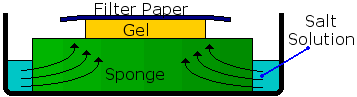
The DNA molecules are then separated into single strands using alkaline chemicals. It is then transferred onto a nitrocellulose filter sheet by pressing it against the gel, carrying the DNA fragments onto the surface of the filter sheet. The gel with filter sheet still attached is removed and separated. The DNA remains in the exact same position that it was on the gel.
Radioactive probes are then allowed to bind to the DNA fragments where they localise as bands. After exposure to X-ray film, these bands darken and we see the characteristic banding that make up the DNA fingerprint.

|

