|

This process is important as it is the first step for cell division (both mitosis and meiosis). This process, as the name suggests, duplicates the DNA strands. The steps of DNA replication are shown below:
Step 1:
The long molecule of double stranded DNA is untwisted at high speeds at its replication fork by two enzymes. Helicase unwinds the parental strands, and DNA gyrase cuts, winds, and rejoins the DNA strands. This occurs at many points along the DNA strand simultaneously. If replication only occured at one point, it would take several days for the 100 million or so base pairs of the average human chromosome to duplicate.
Step 2:
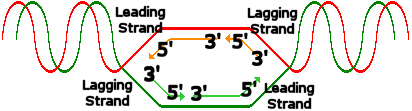
Another enzyme called DNA polymerase and a series of proteins causes the two strands to break apart. Then free nucleotides assemble into a continuous molecule on one side (leading strand), and on the other side (lagging strand) in the 5' -> 3' direction. Fragments of single-stranded DNA are created (these are called okazaki fragments and are between 1000-2000 nucleotides long) and these are later joined together to form a continuous length.
Step 3:
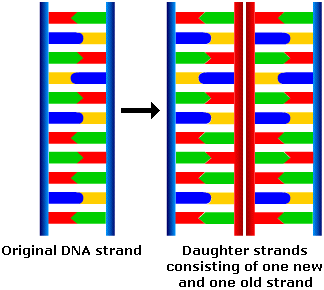
In the end, two lengths of DNA are formed which are the two chromatids. Because each chromatid contains one chain from the "parent" DNA strand, this process is termed semi-conservative. Each chromatid then rewinds into its regular double-helix shape and is then separated from its replicate.
|

